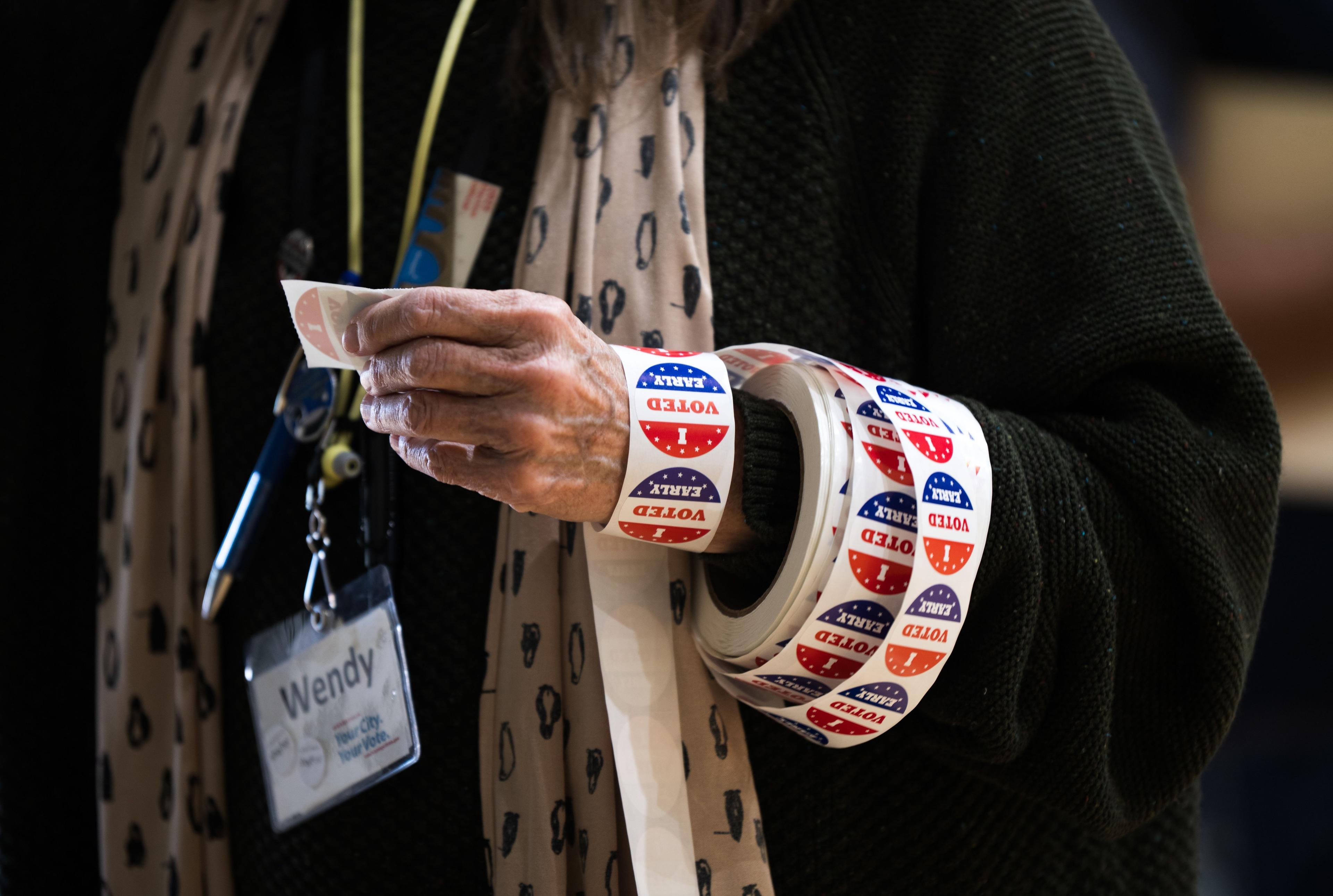
Voters are deciding contests for all 435 seats in the House of Representatives and 35 seats in the Senate, while several states are also holding gubernatorial elections. More than 57 million Americans had already cast their ballots before Election Day, according to the University of Florida Voting Lab.
Democrats are entering election day with a reported nine-percentage-point advantage on the generic congressional ballot, according to CNN’s Poll of Polls. The survey measures voters’ overall preference for which political party should control the House of Representatives. The figures have encouraged Democratic candidates, particularly in closely contested districts where Republicans are defending seats that could determine control of the chamber.
The Senate contests have also attracted attention following the release of final polling by The New York Times and Siena Research Institute. The surveys showed Democratic candidates leading in seven competitive states, including Michigan, Texas, Maine, Kansas, Ohio, Alaska and Iowa. In Michigan, Abdul El-Sayed led Republican Mike Rogers by 53 per cent to 42 per cent, while in Texas, James Talarico was ahead of Ken Paxton by 50 per cent to 43 per cent.
However, the polling figures do not guarantee victories for Democrats. The Siena Research Institute said several of the contests remained within the statistical margin of error, meaning the final outcome could still go either way. The results in states such as Texas and Michigan are particularly significant because they could influence the wider battle for Senate control. Democrats are seeking to gain enough seats to take control of the chamber, while Republicans are working to defend their existing majority.
The elections are widely being viewed as a referendum on President Donald Trump’s administration, particularly its economic policies, immigration measures and handling of the war involving Iran. Trump spent the final weeks of the campaign travelling across Republican-leaning states to support his party’s candidates. On Monday, 2 November, he delivered his closing message at the Lincoln Memorial Reflecting Pool in Washington, where he devoted considerable attention to renovation projects before discussing the elections.
During the address, Trump acknowledged the historical difficulty faced by the party of a sitting president in midterm elections. He told supporters: “For some reason, the sitting president doesn’t win the midterms. But we gave this a very strong shot.” He nevertheless urged voters who supported him in the 2024 presidential election to turn out, arguing that their participation could help Republicans retain control of Congress.
The outcome of the elections could have significant consequences for the remaining two years of Trump’s presidency. A change in control of either chamber could affect the passage of legislation, government spending, congressional investigations and the administration’s policy priorities. The results are also expected to shape the direction of both the Democratic and Republican parties ahead of the next presidential election cycle.
With polling stations open across the country, attention is now shifting from campaign promises and opinion surveys to the actual votes cast by Americans. Election officials are expected to release results progressively after polling stations close in individual states, although close contests may take longer to determine. Until the votes are counted and certified, neither party can claim victory in the congressional battle.

Khalil Ibrahim Yaro
Experienced journalist, Editor in Chief and media professional with a strong background in field reporting, investigative journalism, Editorial production, interviewing, research, digital media and newsroom coordination.
More from Khalil Ibrahim Yaro