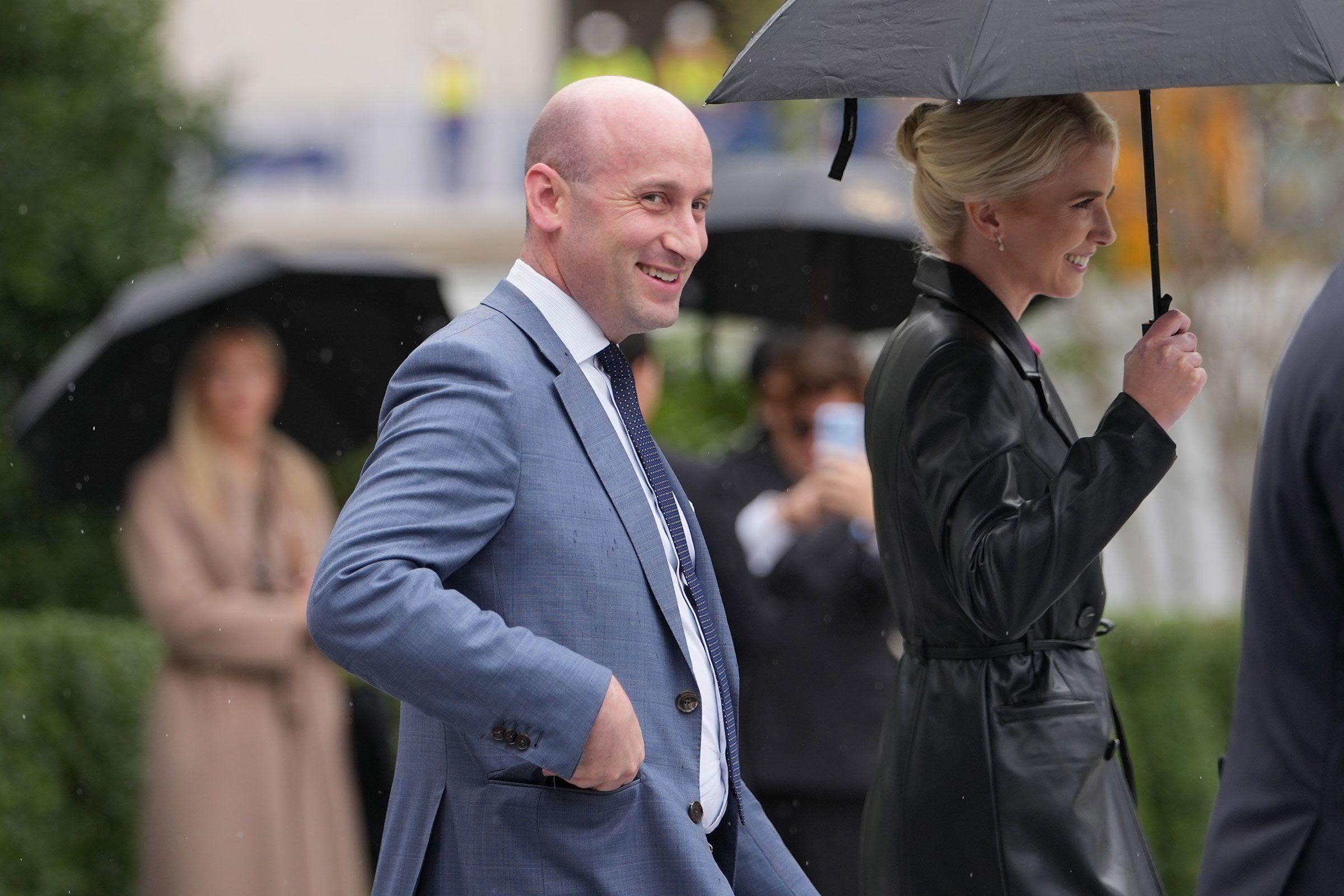
Trump announced the decision on Friday, 6 November 2026, saying Miller would assume the position on Monday, 9 November. The appointment places one of the president’s most influential and controversial political allies at the centre of White House operations as the administration prepares to face a Congress controlled by Democrats.
The decision represents a shift away from early suggestions that Trump might reconsider his political approach following the election results. According to CNN, the president had initially expressed openness to working with Democrats but later became increasingly frustrated by the Republican losses. Some of his allies reportedly encouraged him to replace Wiles with Miller, arguing that the adviser would be more aggressive in defending the president’s agenda.
Miller, who is 41, has been a central figure in Trump’s political movement since the 2016 presidential campaign. He previously served as a senior adviser and speechwriter during Trump’s first administration and later returned to the White House during the president’s second term. His influence has grown through his involvement in immigration, domestic policy and the administration’s approach to executive power.
He is particularly associated with the administration’s tough immigration policies, including its mass deportation campaign. Miller has advocated stricter immigration controls and played a major role in developing policies intended to increase arrests and removals. His approach has attracted strong criticism from immigrant rights organisations and Democratic lawmakers, while supporters argue that it reflects Trump’s commitment to enforcing immigration laws.
The policies associated with Miller have also generated controversy over their implementation and legal implications. CNN reported that the deportation campaign prompted protests and confrontations involving federal immigration agents, while incidents involving the mistaken arrest of US citizens intensified criticism. The administration also faced public anger following the deaths of two Americans, Renee Good and Alex Pretti, in shootings involving federal agents in Minnesota.
Miller’s promotion is expected to make relations between the White House and the Democratic-controlled Congress more confrontational. Democratic lawmakers have indicated that they intend to investigate several aspects of the administration’s policies and actions, including immigration enforcement. Some Democratic politicians have also criticised Miller personally, arguing that his appointment signals that Trump intends to intensify rather than moderate his political approach.
The appointment could also make negotiations over immigration legislation more difficult. Before the announcement, some lawmakers and immigration advocates had reportedly hoped that the election results might create an opportunity for cooperation between Republicans and Democrats on immigration reform. However, Miller’s selection has raised doubts about whether such negotiations will make progress.
Meanwhile, outgoing chief of staff Susie Wiles, who was credited by some observers with bringing discipline to the White House, is leaving the position following the election shake-up. Miller’s appointment therefore marks a significant change in the administration’s leadership at a time when Trump faces mounting political pressure and a more hostile Congress.
The development suggests that Trump is choosing to strengthen his existing political approach rather than respond to the Republican losses with a major change of direction. With Miller set to take up the role on 9 November, attention will now focus on how the new chief of staff influences the president’s policies and the administration’s relationship with Congress.

Khalil Ibrahim Yaro
Experienced journalist, Editor in Chief and media professional with a strong background in field reporting, investigative journalism, Editorial production, interviewing, research, digital media and newsroom coordination.
More from Khalil Ibrahim Yaro