
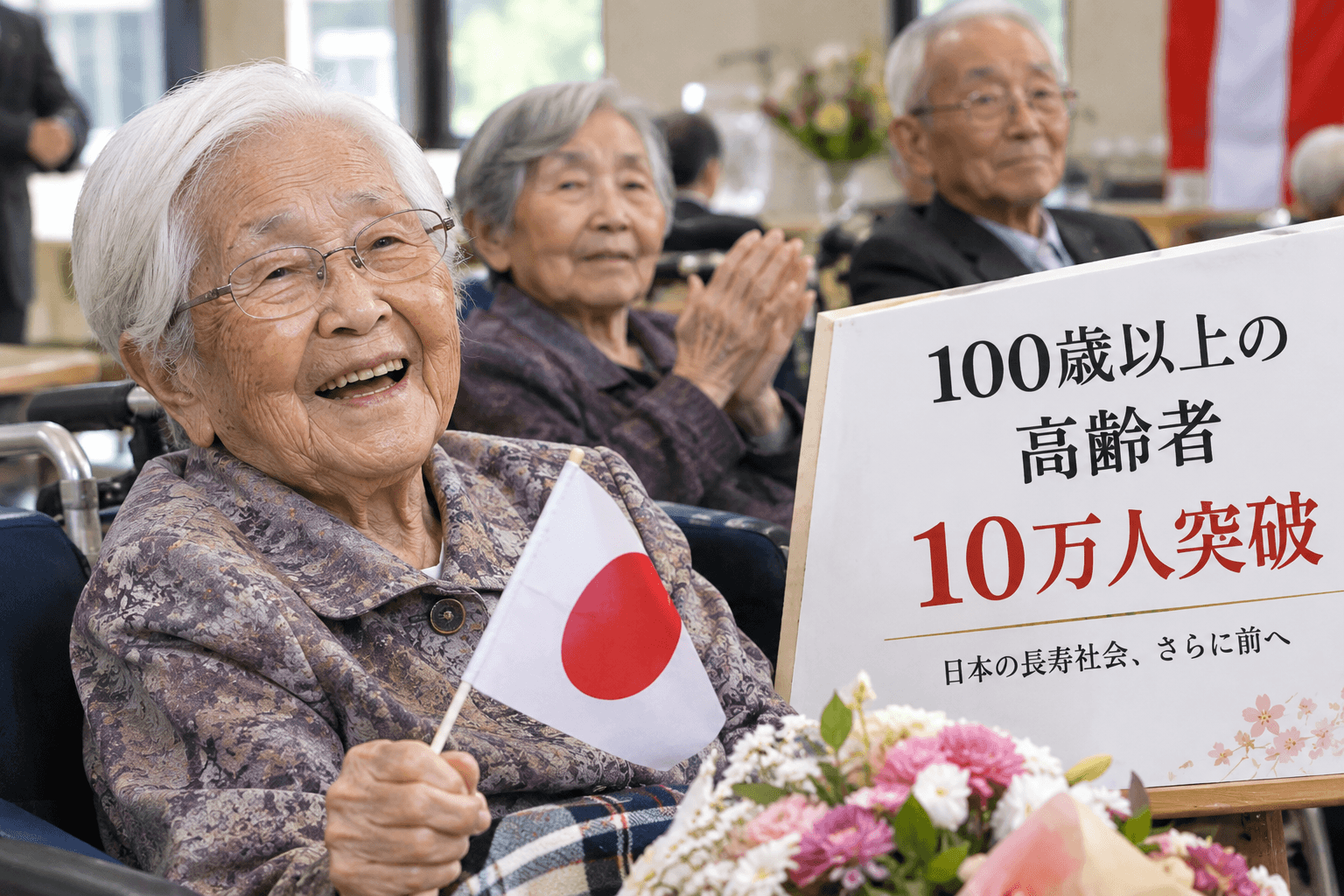
Japan’s Ministry of Health, Labour and Welfare said on 15 September 2026 that the number of people aged at least 100 had reached 107,677, an increase of 7,914 from the previous year. The figure is based on resident registration data as of 1 September, with ages counted as of 15 September.

Chat Gpt
The latest figures represent another record for Japan, a country already known for having one of the world’s oldest populations.
Of the more than 107,000 centenarians recorded this year, 94,298 are women, while 13,379 are men. Women therefore account for almost 88 per cent of people aged 100 and above.
The Japanese government says the number of centenarians has increased dramatically over the past several decades.
When Japan’s Law on Social Welfare for the Elderly was introduced in 1963, there were only 153 people aged 100 or older across the country.
The number passed 1,000 in 1981 and exceeded 10,000 in 1998.
By 2012, the number had surpassed 50,000.
It reached 99,763 in 2025, meaning the latest increase has now pushed the figure beyond 100,000 for the first time.
Japan’s health ministry has pointed to several factors that have contributed to the rise in longevity.
These include improvements in living conditions, better nutrition and dietary habits, and advances in medical technology.
Health Minister Ueno Kenichi said the growing number of people living to 100 and beyond was significant not only because of longer life expectancy, but also because many older people continue to remain active in society.
The government has also highlighted the importance of maintaining a sustainable social security system as Japan’s population continues to age.
The increase in the number of very elderly people is taking place alongside wider demographic changes in the country.
Japan has experienced a long-term decline in its birth rate, while the proportion of older people within the overall population has continued to rise.
That combination is creating challenges for the country’s workforce, healthcare system, pensions and long-term care services.
The government therefore faces the task of ensuring that older citizens can continue to receive appropriate healthcare and social support while maintaining the sustainability of social security programmes for younger and working-age generations.
The Ministry of Health, Labour and Welfare said the government would continue working towards what it describes as a social security system covering all generations, with the aim of ensuring that necessary services reach those who need them.The record number of centenarians is also being marked through Japan’s annual celebrations for people reaching the age of 100.Under Japanese law, 15 September is designated as Respect for the Aged Day, and the government traditionally presents congratulatory letters and commemorative gifts to people reaching 100.This year, 54,294 people are eligible to receive the government’s centenarian recognition, including those who reached or are expected to reach the age of 100 during the current fiscal year and were alive on Respect for the Aged Day. The number eligible for the centenarian recognition has also increased from the previous year.Women account for 45,769 of this year’s 54,294 recipients, while 8,525 are men.Japan’s record is particularly notable because longevity has become a defining feature of the country’s demographic profile.The country is home to some of the world’s oldest people, and the number of people reaching very advanced ages has continued to increase despite Japan’s overall population facing long-term demographic pressures.The government has also continued to monitor the number of people living beyond 100.In August, Japan’s health ministry announced the death of Shigeko Kagawa, who was 115 years old and had been recognised as the country’s oldest person.Following her death, Fuyo Kishimoto, aged 114, became Japan’s oldest living person, according to the ministry. The latest figures do not mean that every part of Japan is experiencing population growth.Instead, they illustrate one of the country’