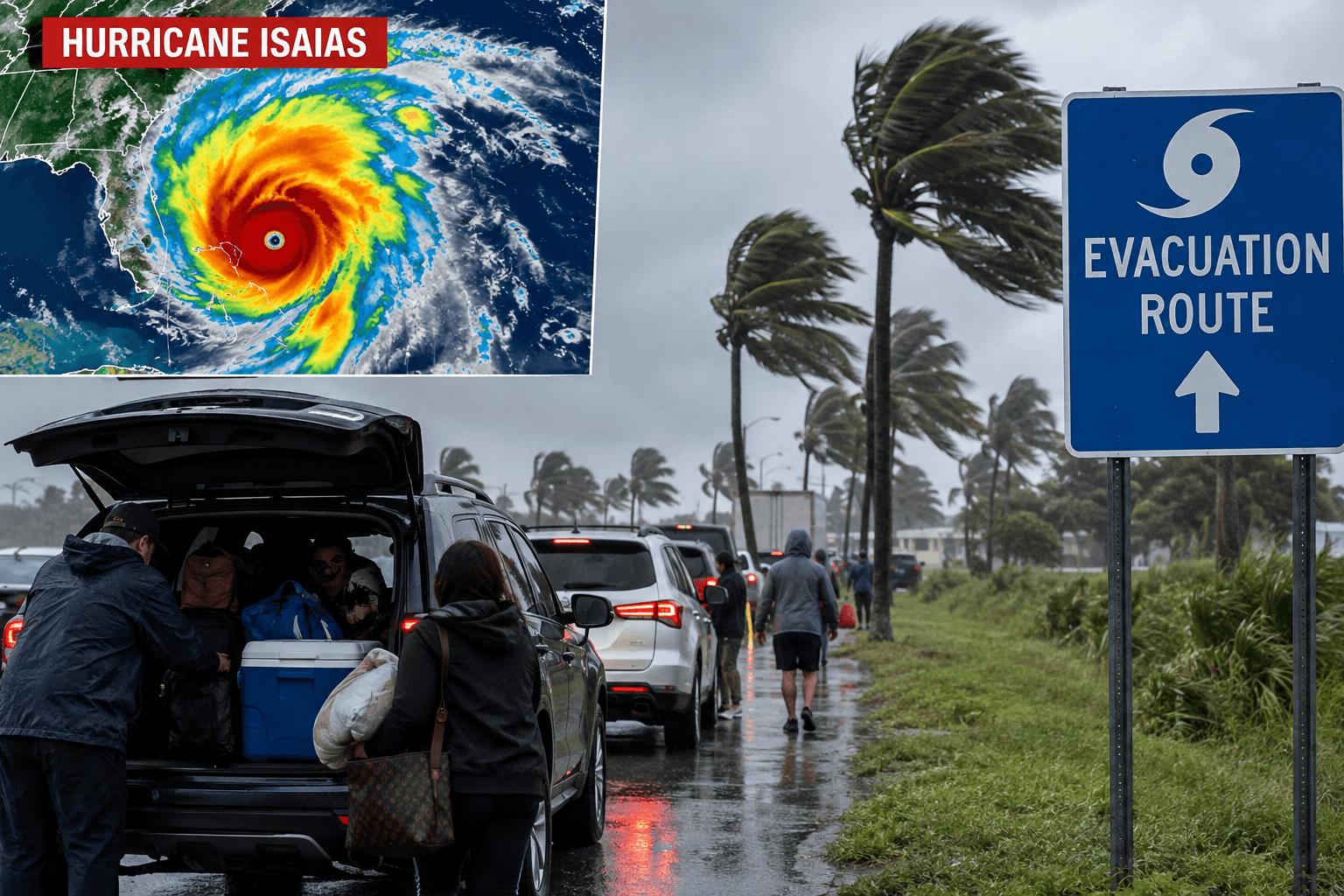
The US National Hurricane Center said on Friday, October 9, that Isaias had intensified into a Category Three hurricane, with sustained winds reaching approximately 120 miles per hour, or 193 kilometres per hour. The storm is approaching the coast near Florida, Alabama and Mississippi, with landfall expected on Friday evening.
Emergency measures are underway in several affected areas, particularly in Florida's Panhandle and coastal Alabama. Officials have issued evacuation orders for vulnerable communities, while emergency shelters and response teams have been prepared to assist residents who may need to leave their homes.
Forecasters have warned that the hurricane could produce storm surges of up to nine feet in some coastal locations, alongside heavy rainfall, flash flooding and possible tornadoes. The dangerous conditions could also cause widespread power outages and significant damage to buildings and infrastructure.
Florida Governor Ron DeSantis and Alabama Governor Kay Ivey have declared states of emergency in affected areas, allowing authorities to mobilise resources and prepare for the storm's arrival. Residents have been urged to follow evacuation instructions and complete preparations before conditions deteriorate further.
The approaching hurricane has also disrupted energy operations in the Gulf of Mexico. Several oil and gas companies have evacuated offshore workers and suspended production at some facilities as a precaution against dangerous weather conditions.
Isaias is the first Atlantic hurricane of the 2026 season, developing unusually late in the year. Meteorologists say it could weaken slightly before reaching land, but warn that it would remain dangerous even if its wind speeds decrease.
Authorities continue to monitor the hurricane's movement as emergency services prepare for its expected landfall and the possibility of flooding and damage extending further inland.