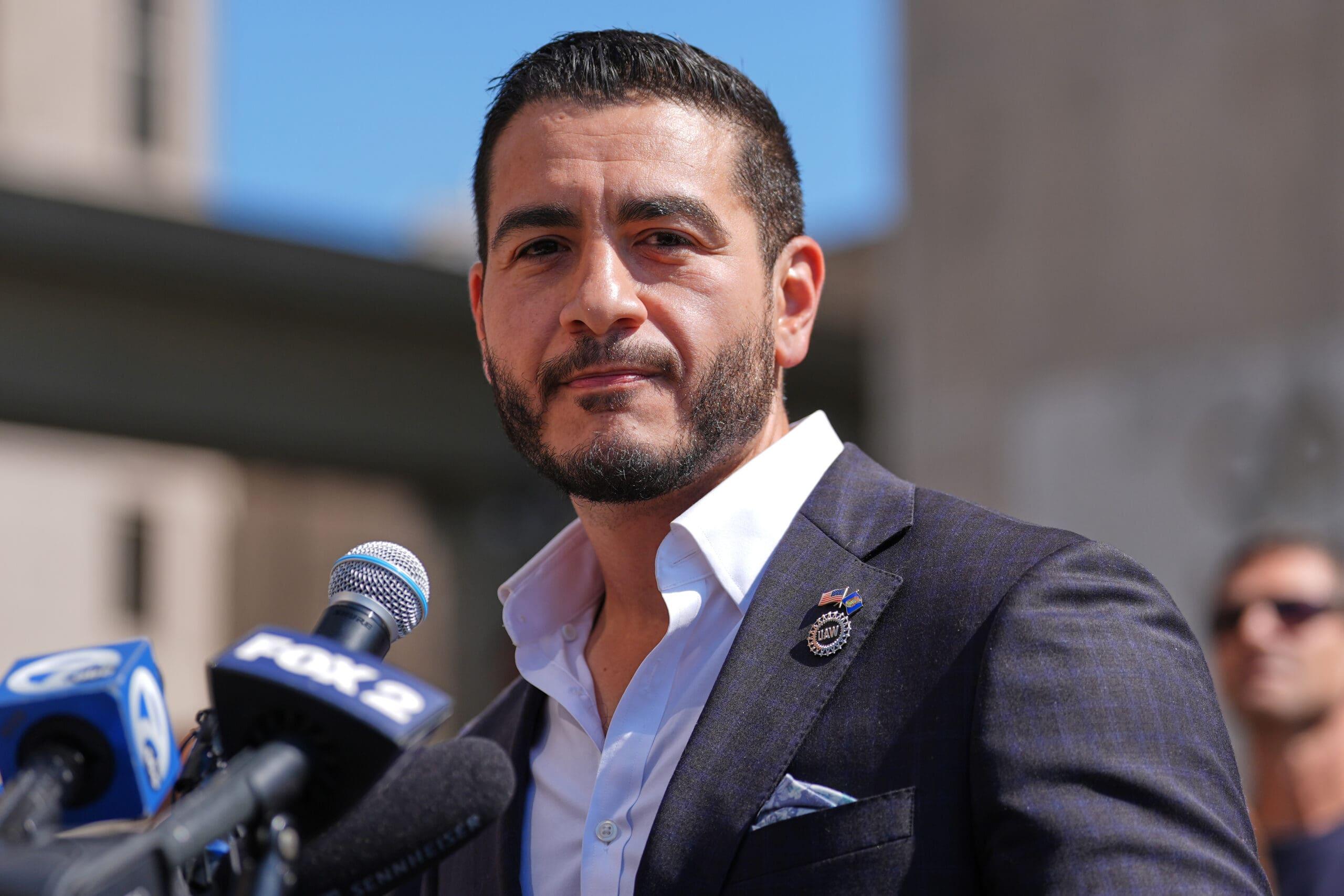
Speaking to cheering supporters in Detroit in the early hours of Wednesday, 4 November 2026, El-Sayed celebrated his defeat of Republican candidate Mike Rogers in a closely watched contest. His victory makes him the first Muslim elected to the United States Senate, marking a historic moment for Muslim and Arab-American representation in the country's national legislature. The Associated Press called the race for El-Sayed after approximately 88 per cent of ballots had been counted, with the Democrat leading by six percentage points at that stage. Later figures showed his lead had widened to around seven points with approximately 97 per cent of votes counted.
In his address, El-Sayed thanked voters who had supported his campaign across Michigan, including those who welcomed him into their homes, churches and synagogues. He described the victory as the result of a grassroots movement that challenged established political interests and overcame significant financial disadvantages. He said people had been told that a candidate with his name, background and Muslim faith could not win a statewide Senate election, but the result had demonstrated the power of ordinary voters.
The senator-elect also addressed attacks directed at his religious identity during the campaign. He criticised remarks made by Trump and other Republican figures, arguing that the campaign had focused too heavily on his name and faith instead of the economic difficulties facing American households. Addressing parents who had struggled to explain the president's comments to their children, El-Sayed said they should tell them that those who promoted such attacks had lost. He added that the United States was large enough to accommodate people from different religious and cultural backgrounds.
El-Sayed then turned directly to Vice-President JD Vance, making a pointed reference to the constitutional process through which newly elected senators are sworn into office. He told Vance that there was an irony in the fact that the vice-president would be required to administer his oath in January. He also addressed Trump, saying that after the swearing-in ceremony, the president could simply call him “Senator”. The remarks drew loud cheers from supporters, reflecting the confrontational tone of a campaign that had been marked by repeated exchanges between the candidates and national political figures.
The Michigan Democrat also criticised the influence of political action committees and wealthy donors, singling out the American Israel Public Affairs Committee, commonly known as AIPAC. He accused powerful outside interests of attempting to determine the outcome of the election through campaign spending. El-Sayed said his movement had overcome substantial financial pressure and promised to challenge what he described as a system of politics dominated by wealthy donors and special interests.
On foreign policy, El-Sayed repeated his opposition to US military assistance for Israel, arguing that American taxpayers' money should be directed towards domestic priorities rather than supporting the war in Gaza. He said public funds should be invested in schools, healthcare and infrastructure in the United States. He also defended the rights of Palestinian children to grow up safely in their ancestral homeland, describing calls for equal rights, peace, dignity and self-determination as expressions of human solidarity rather than hatred. Chants of “Free Palestine” were heard among supporters during the victory celebration.
Turning to his defeated opponent, Mike Rogers, El-Sayed told the Republican to enjoy his retirement and said he hoped Michigan would not have to see another campaign like his again. Rogers, a former congressman and FBI agent who had received Trump's endorsement, subsequently issued a statement conceding the election. The contest had attracted national attention because Republicans had hoped to capture the seat being vacated by retiring Democratic Senator Gary Peters.
Beyond the political exchanges, El-Sayed used the speech to recognise the significance of his victory for future generations. He said his campaign had challenged assumptions about who could succeed in American politics and demonstrated that voters could reject divisive rhetoric in favour of discussions about their everyday concerns. His campaign had focused on the cost of living, access to healthcare, economic inequality and reducing the influence of corporations and wealthy donors. His proposals included Medicare for All, a government-funded universal healthcare programme.
In a separate interview with the Associated Press on Wednesday, El-Sayed described the campaign against him as hateful and spiteful, saying voters had rejected attacks on his Muslim identity. He said the victory was only the beginning, arguing that the real measure of success would be what he could achieve after taking his seat in the Senate. He also called for new leadership within the Democratic Party, declining to commit to supporting current Senate Democratic leader Chuck Schumer for another term.
El-Sayed is expected to take office in January 2027, when the newly elected members of Congress are sworn in. His victory gives him a place in the Senate at a time of major political change in Washington, following Democratic gains in the November midterm elections. For his supporters, the result represents a historic breakthrough in political representation; for the incoming senator, the challenge will now be to translate his campaign promises into legislation and public policy.
Khalil Ibrahim Yaro
Experienced journalist, Editor in Chief and media professional with a strong background in field reporting, investigative journalism, Editorial production, interviewing, research, digital media and newsroom coordination.
More from Khalil Ibrahim Yaro