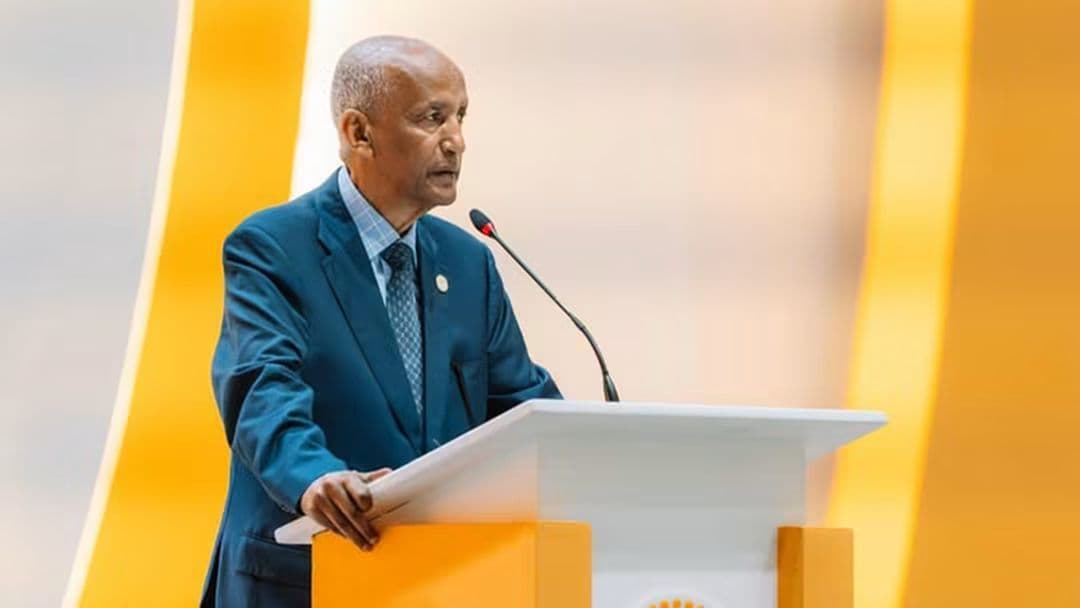
Chief Commissioner Professor Mesfin Araya announced the date during a press briefing on September 10, according to the Commission.
The planned submission represents a major step in Ethiopia’s national dialogue process, which was established to provide a platform for addressing fundamental political, social and national issues through consultation, dialogue and consensus-building.
The Commission says it has completed the major stages of the dialogue process, including gathering and consolidating agenda items raised by Ethiopians from different regions, members of the diaspora and other stakeholders.
The process brought together participants from across the country to discuss issues considered important to Ethiopia’s future political and social development.
A major stage of the process was the National Dialogue Conference held in Addis Ababa.
The conference brought together thousands of participants who deliberated on a range of national issues before the discussions concluded in August.
The agenda covered eight broad areas, including nation-building, identity and national ownership, political systems, representation and elections, government structure, corruption and good governance, as well as other fundamental issues affecting the country.
The Commission’s mandate includes documenting the issues raised during the dialogue, recording the process through which they were discussed, consolidating recommendations reached through the consultations and developing strategies for implementing those recommendations.
The recommendations are now expected to move from the dialogue process to the country’s legislative and government institutions for consideration and possible implementation.
The September 20 submission will therefore mark an important transition from consultation to the next stage of the process, where the recommendations can be examined by the relevant institutions.
However, the dialogue process has not been without disagreements.
Some issues generated significant debate during the conference, including a disagreement involving representatives from Oromia over a proposed recommendation concerning the constitutional status of Addis Ababa.
The issue was sent back for further consideration during the final stages of the conference, demonstrating some of the complexities involved in reaching consensus on sensitive national questions.
Despite those disagreements, the National Dialogue Commission announced on August 22 that the national dialogue conference had successfully concluded.
The Commission has since been working on consolidating the outcomes of the discussions and preparing the documents required for the next stage.
The recommendations are particularly significant because they are expected to address some of the long-standing political and institutional questions that have contributed to tensions in Ethiopia.
Their eventual impact, however, will depend not only on the issues identified and recommendations produced during the dialogue, but also on how the relevant institutions respond to them.
The submission comes at an important moment in Ethiopia’s political transition.
The country held its general election in June 2026, with the National Election Board of Ethiopia reporting a decisive victory for the ruling Prosperity Party.
According to official election results, the Prosperity Party secured 438 seats in the House of Peoples’ Representatives, giving it a substantial parliamentary majority.
The composition of the new parliament is therefore expected to be an important factor in determining how the recommendations from the national dialogue are considered.
The dialogue process itself was created with the broader objective of helping Ethiopians address disagreements through an inclusive national platform rather than through confrontation.
For a country that has experienced serious political tensions, conflict and disagreements over questions of identity, governance and representation, the process has attracted considerable attention both within Ethiopia and internationally.
The Commission has repeatedly stressed the importance of broad participation in the dialogue, including contributions from communities across the country and Ethiopians living abroad.
The final recommendations will provide an indication of the areas where participants were able to reach common ground, as well as the issues that remain contested.
The September 20 submission is therefore expected to be closely watched by political parties, civil society organisations, regional representatives and other stakeholders.
It will also provide an opportunity to assess whether the national dialogue can move beyond consultation and produce practical changes in Ethiopia’s political and institutional system.
The Commission’s responsibility does not end simply with presenting the recommendations.
Its mandate also includes proposing strategies for implementing the outcomes of the dialogue, meaning that the next phase will involve determining how agreed recommendations can be translated into government policy and institutional action.
The process could therefore become an important test of Ethiopia’s ability to transform national consultation into concrete reforms.
At the same time, sensitive questions that remain disputed could require additional consultations before any final action is taken.
The experience of the Addis Ababa conference showed that reaching agreement on some issues can be difficult, particularly where questions of constitutional arrangements, political representation and regional interests are involved.
Nevertheless, the Commission says the national dialogue conference has concluded and that its work has now entered the final stage.
With the recommendations scheduled to be submitted to the House of Peoples’ Representatives on September 20, attention is now shifting from the dialogue itself to the institutions that will be responsible for considering its outcomes.
The submission will provide lawmakers and other relevant authorities with the opportunity to examine the recommendations and determine the appropriate steps for their consideration and implementation.
For Ethiopians who participated in the dialogue, the effectiveness of the process will ultimately be measured not only by the number of people who took part or the issues discussed, but by whether the recommendations contribute to resolving some of the country’s long-standing national challenges.
For now, the Ethiopian National Dialogue Commission has confirmed September 20, 2026 as the date when it will present its recommendations to the House of Peoples’ Representatives.
That submission will mark the next major stage in Ethiopia’s national dialogue process, as the country moves from nationwide consultation toward consideration, implementation and the possibility of institutional reforms based on the outcomes of the dialogue.

Khalil Ibrahim Yaro
Experienced journalist, Editor in Chief and media professional with a strong background in field reporting, investigative journalism, Editorial production, interviewing, research, digital media and newsroom coordination.
More from Khalil Ibrahim Yaro